2025Our Baby Travel Gear: What Worked and What Didn't
Our gear has evolved as our little one has grown. What worked at five months looked quite different from what we pack now. Where things have changed meaningfully with age, we've noted it. Everything here reflects real use across multiple trips — Japan, Thailand, Vietnam, and home.
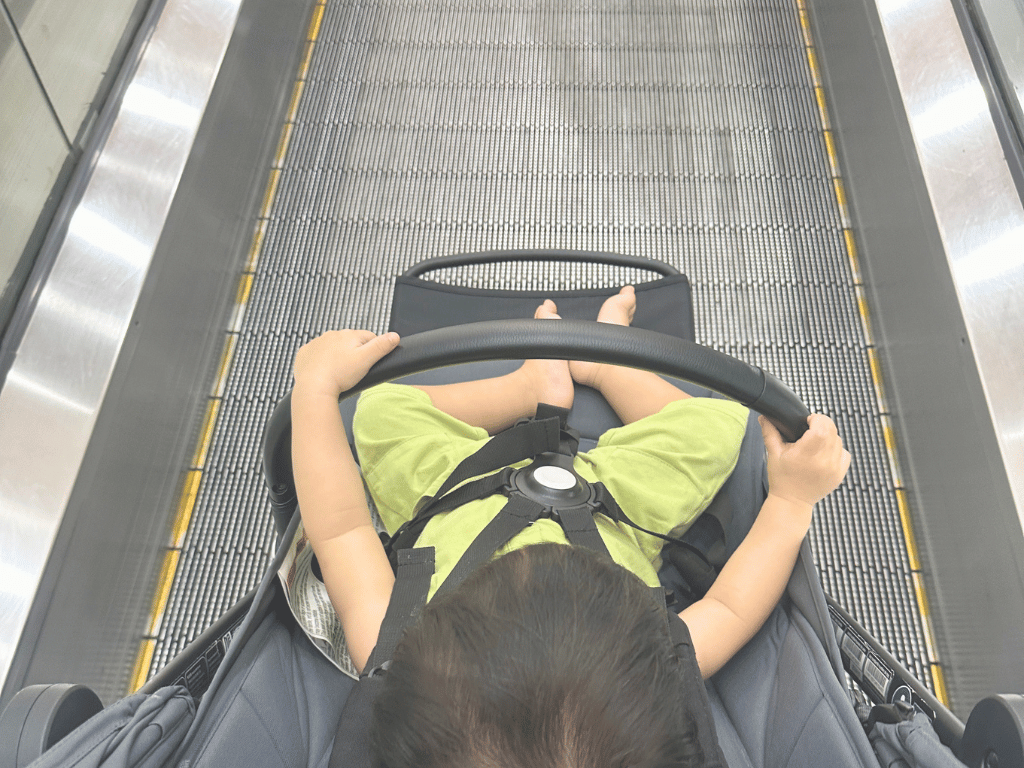
On the Move
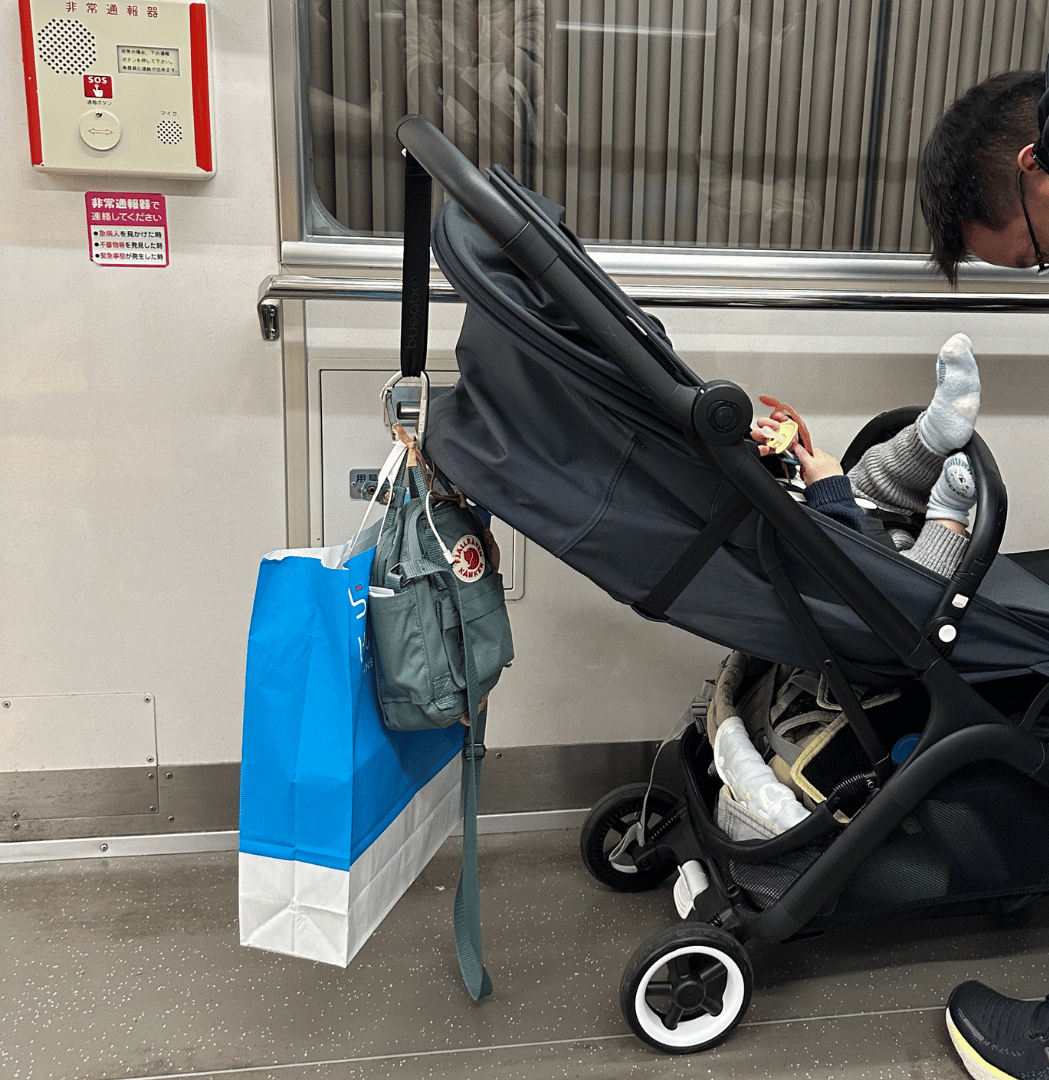
The Stroller
A lightweight, cabin-friendly stroller was non-negotiable from the start. We use the Bugaboo Butterfly — and it's held up well across every trip.
What makes it work for travel: it's light enough to carry without strain, folds and opens with one hand (genuinely useful when your other hand is occupied), and fits in the overhead cabin. For navigating airports, train stations, and resort grounds, it's been consistently reliable.
A later model has since been released, but we're still happy with ours. Sometimes the version you've already figured out is the right one.
The Carrier
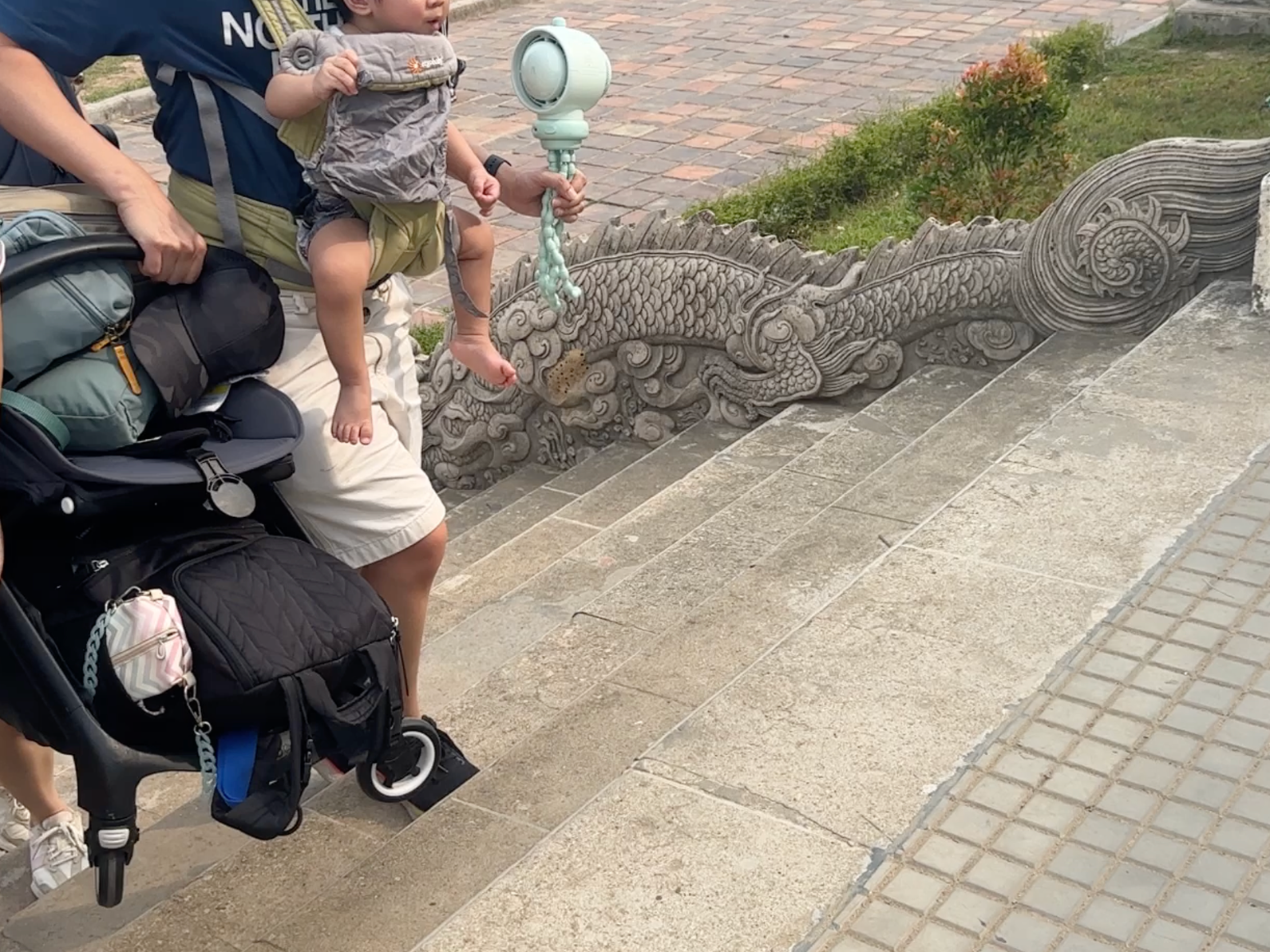
For situations where the stroller isn't practical — crowded temples, uneven cobblestones, flights of stairs, hiking trails — a carrier becomes essential. We use an Ergobaby Four Position 360 (an older velcro model), and one detail that's made a real difference for travel: the velcro waist adjustment makes it easy to swap between parents quickly without re-fitting from scratch. If you're alternating between two adults, this matters more than you'd think.
Stroller Fan
Heat is a real consideration when travelling with a baby, particularly across Southeast Asia. We clip a portable fan directly onto the stroller — and after trying a few models, we settled on the JisuLife Stroller Fan Life2S. It's quiet, has good battery life, and doubles as a handheld fan when needed. We used it throughout our Vietnam trip, including at the Imperial City in Hue where the heat and limited shelter made it particularly useful.
Cup Holder
A small addition, but a useful one if you're someone who likes to keep a drink on the go without using up a hand. The Bugaboo Cup Holder attaches to the stroller frame and has been worth having on longer outings. Optional, but nice.
The Diaper Bag
After trying a few options, we landed on the Skip Hop Forma Diaper Backpack — and it's been our go-to across every trip. What works: it's lightweight, structured enough to stay open and organised, but soft enough to stuff under the stroller when needed. The pockets are genuinely well-placed rather than just numerous.
What's Inside — By Age
5 to 6 Months
Diaper mat
Diapers
Barrier cream
Rinse-free spray — for thorough clean-ups on the go when water isn't available. We use Apple Crumby No-Rinse Nappy Cleanser
Wet wipes
Sanitiser wipes
Plastic bags for soiled diapers
Spare clothes
Swaddle
Socks
Pacifier
Bib (one on, one spare)
Milk and feeding items (see Feeding section)
9 Months Everything above, plus:
Teether
Cereal in a Hegen container
Solid food in thermal flask
Spoon
Eating bib
Wet towel for cleaning face after meals
Water in Hegen
Chewing snacks
1 Year+
Diapers (pants style — more on this below)
Barrier cream
Rinse-free spray
Wet wipes
Sanitiser wipes
Zappy food-safe wipes — for wiping down surfaces, trays, and hands before meals
Plastic bags for soiled diapers
Spare clothes
Socks
Hot food in thermal flask
Hegen with spoon
Hot and room temperature water
Milk powder
Snacks
Drinking water
A Note on Diapers
From around one year, we switched to pants-style diapers over tape. The difference on the road: a baby who's mobile and doesn't always want to lie still for a change is much easier to manage with pants. They're also more practical when a proper changing station isn't available and you're making do with what's around you.
Keeping Milk Warm
Getting the milk temperature right on the go — without a bottle warmer, a kettle, or much time — took some trial and error. Here's what we tried:
Nespresso traveller cup with hot water — the simplest method overall. Fill with hot water, sit the bottle in, and let it warm through. The challenge: gauging the right water temperature and how long to leave it can take some getting used to. We keep this in the stroller cup holder while on the move. Straightforward once you have the timing down.
Bottle wrap warmer powered by a power bank — appealing in theory, less practical on the ground. When you're already managing multiple items during a feed, adding a power bank into the mix adds friction rather than removing it. We also found the heating uneven and had to remember which heat mode to toggle between. We stopped using it fairly early on.
Bottle warming pouch — not effective in cold climates or for extended periods, but useful in one specific situation: pre-mixed milk carried onto the flight before take-off, when bags have to be stowed overhead and you need the bottle within reach. It keeps the milk at a usable temperature for that window of time without the risk of spillage that comes with a cup of water.
For Solids (From Around 6 Months)
Once our little one started solids, the thermal flask became one of our most-used pieces of kit. We'd pack his lunch and dinner each morning from the hotel buffet — plain porridge, steamed fish, soft vegetables, and it stayed warm throughout the day. Simple, reliable, and saves the mental load of figuring out meals on the go.
A Hegen container travels well for dry things like cereal, and doubles as a water cup with the right lid. Compact and easy to clean.
Keeping Baby Occupied
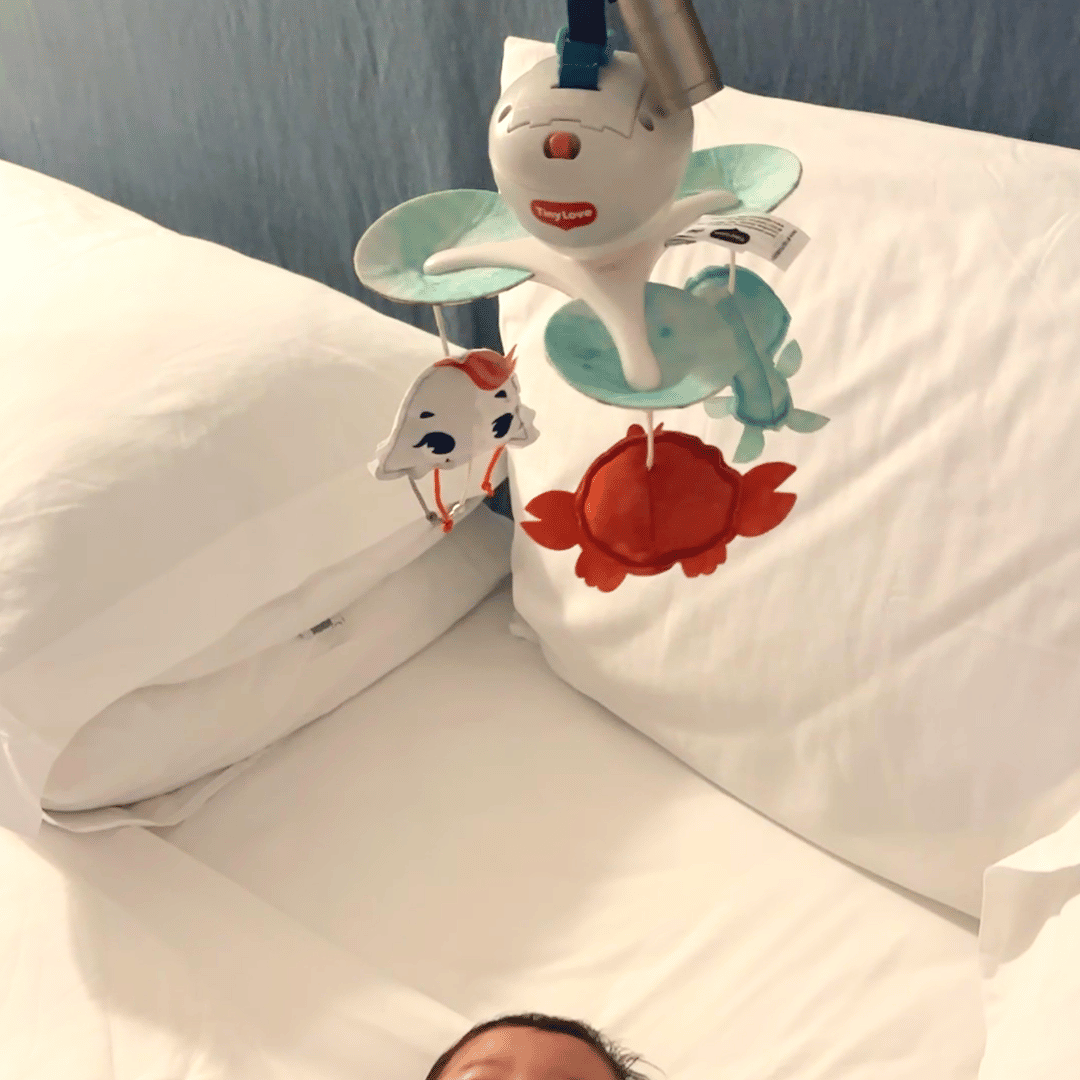
Baby Mobile
From newborn through to the early months, a portable mobile made a real difference for those moments when you need both hands free — packing, getting ready, settling into a new room. We use the Tiny Love Treasure the Ocean 3-in-1 Take Along Mobile.
What makes it travel-friendly: it comes with three attachment options — a mobile arm for cots and travel bassinets, a quick-connect clip for the stroller, and a hook-and-loop fastener for other surfaces. It goes where we go without taking up meaningful space. The music runs for 30 minutes, which is usually enough. The black and white visual elements are particularly engaging for younger babies who are still developing their vision.
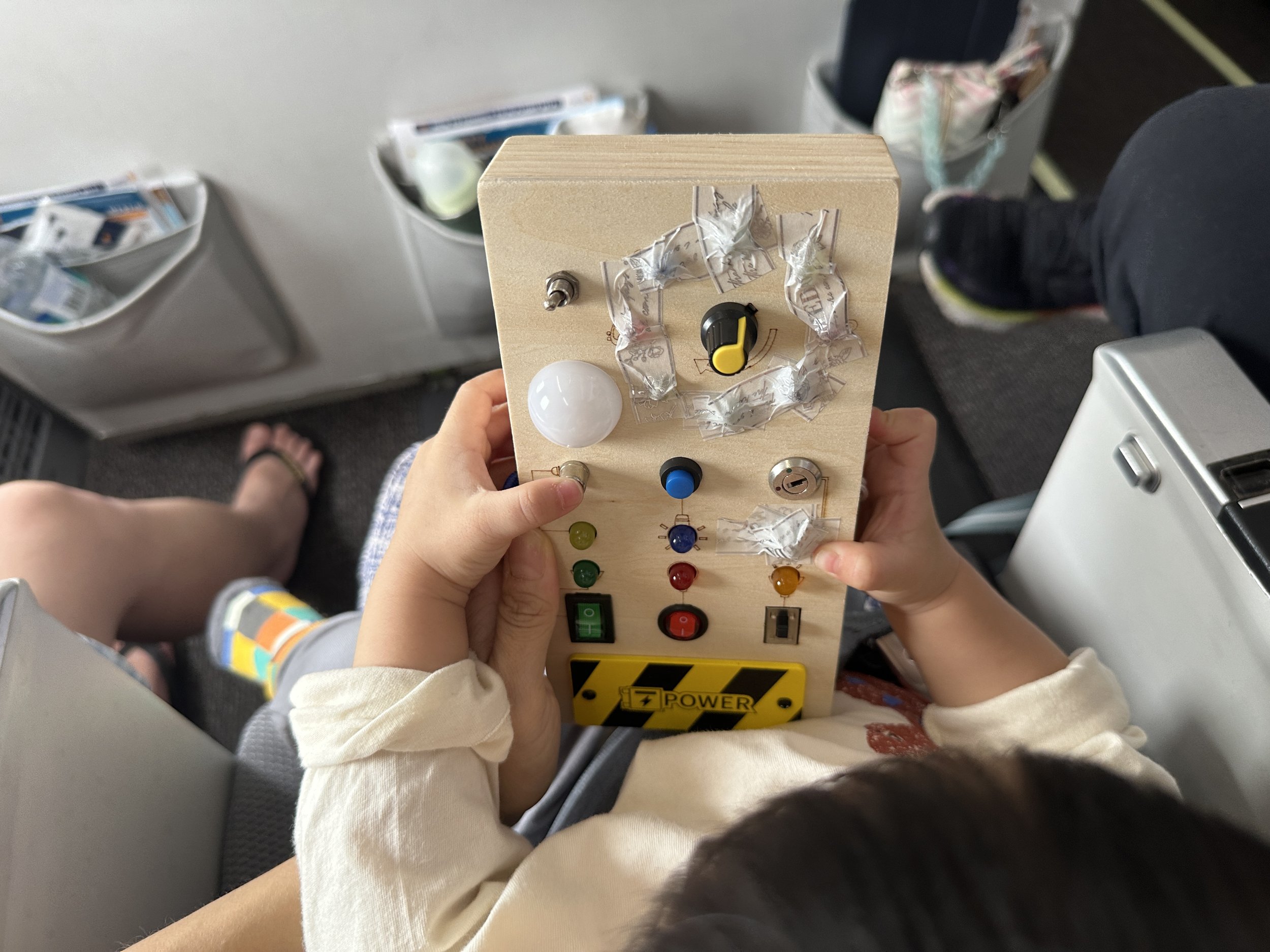
New Toy Strategy
From around six months, we started saving one new toy exclusively for flights. The novelty buys significantly more occupied time than a familiar one — a baby's sense of wonder at something new is genuinely extended. We'd keep it hidden until we were airborne. Low-sound or silent toys are preferable to avoid disturbing other passengers, though the cabin noise is usually loud enough to mask most things. We’ve tried busy cubes, busy books and busy boards.
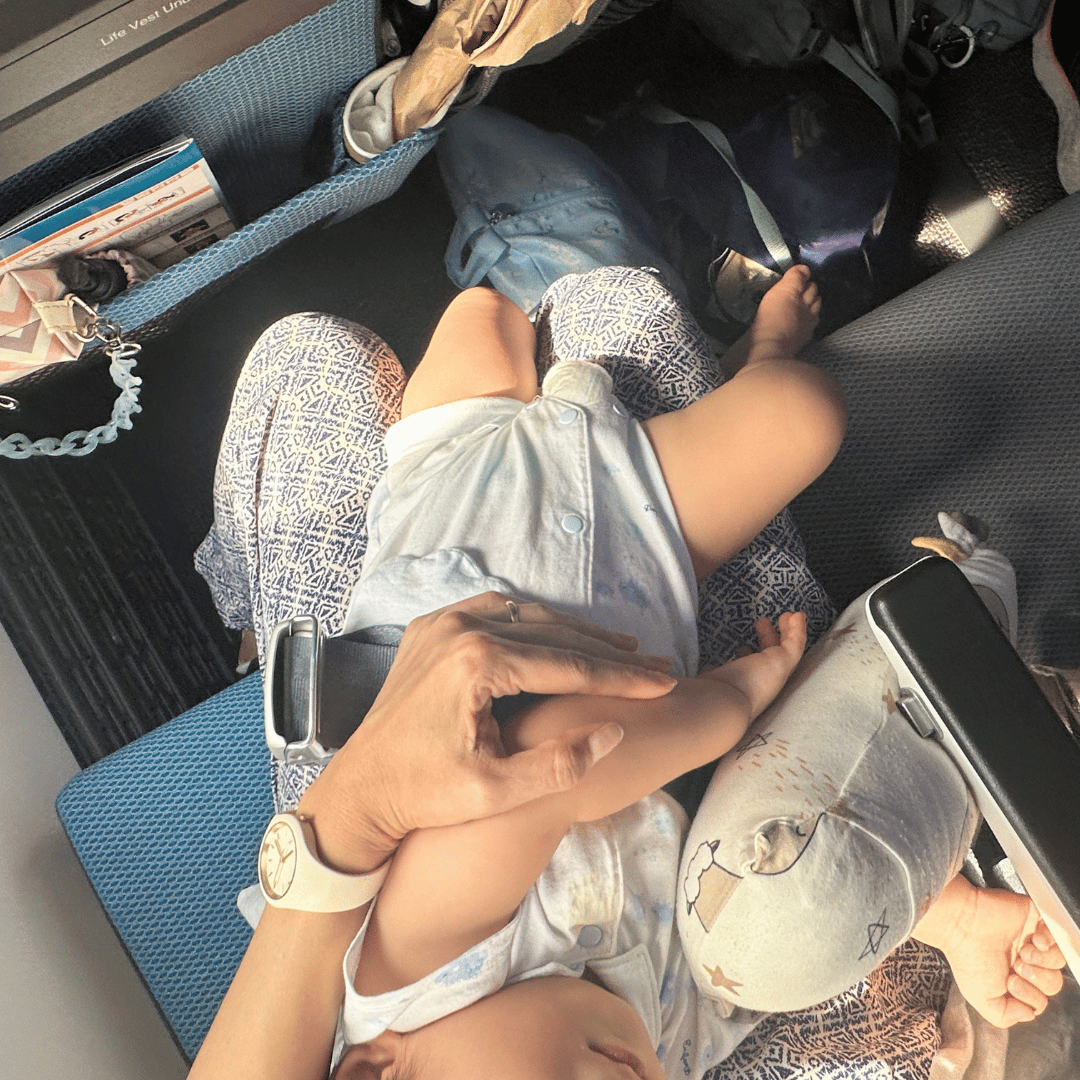
In-Flight Bags
Once our little one started on solids, we began packing two separate bags for flights — one for food and feeding, one for comfort and changing. Keeping them separate meant not having to dig through everything to find what we needed mid-flight.
Bag 1 — Food & Feeding
Lunch in thermal flask
Dinner in thermal flask
Empty containers for feeding
Spoons
Snacks
Hot water and room temperature water
Milk powder in pre-measured portions
Some fruit
Bag 2 — Comfort & Changing
Pillow (his own — helped with sleep on longer flights)
Toys
Diaper changing mat
Diaper cream
Spare diapers
Pumping & Sterilisation
We use an adapted washing and sterilisation system that we use at home. Pigeon sterilisation tablets, a collapsible soaking vessel, and a designated sink where possible. For everything related to pumping, milk storage, and sterilisation in full, we've covered it all in a separate article. The setup applies equally whether you're pumping or formula feeding.